THE DISSOCIATION OF TIME

THE DISSOCIATION OF TIME
In Cinema
By Serge Leterrier
“Cinema dissociates time to reveal its inner truth, turning chronology into living matter—where memory, desire, and perception sculpt duration.” — Serge Leterrier
The dissociation of time in cinema often appears before the first shot, in that precise shiver when the theater goes dark and the mind consents to another temporality. The film then offers a singular experience: the instant no longer answers to the rhythm of hands on a dial; duration bends to sensation; chronology becomes material. From that moment on, the spectator enters a territory where the order of seconds loses its authority—where lived experience governs, where memory, desire, fear, and expectation impose their own measure.

This dissociation belongs neither to a mere narrative trick nor to a puzzle designed to flatter cleverness. It reaches toward an intimate truth: human time never unfolds in a straight line. A day of mourning carries the weight of a century; a night of love evaporates in a heartbeat; a second of shock stretches and engraves itself. Cinema—the art of the cut and the return—holds a rare power to make that truth visible, to give body to inner duration, to expose the fracture between the clock and experience.
It begins with editing. The cut becomes a scalpel: it isolates a gaze, a trembling hand, a detail that seems insignificant—then throws the story elsewhere, farther away, earlier, to the edge of a memory or the threshold of a promise. In a few transitions, an entire life becomes a constellation. An ellipse opens an abyss: years vanish, then return as traces—wrinkles, silences, the changed weight of a face. Cinema brings a simple fact into focus: continuity rests on a pact, and a single gesture of editing can shatter it.
Dissociation deepens when a film embraces several temporal regimes at once. A present advances, a past insists, a future contaminates decisions, and each block of duration bears its own texture. Color, grain, lens choice, shot cadence, the density of sound—everything sculpts distinct strata. Time becomes almost a set, an atmosphere, a pressure against the skin. Some narratives handle this plurality with watchmaker precision: three lines of action move at different speeds, then converge in the same impact. There, dissociation does more than serve plot; it produces vertigo, imposes a physical sensation, turns understanding into experience.
Memory stands at the center of this theater. The moment a film inhabits a character’s consciousness, time begins to limp, to return, to branch. A recollection rises at the turn of a smell, a sentence, a passing face, and the story yields with unsettling docility. The past speaks in the present tense. Chronology becomes a hypothesis. Certain works build their entire framework on this principle, until memory itself becomes architecture: Memento reverses progression; Mulholland Drive opens corridors of perception; Hiroshima mon amour lets remembrance breathe in the seams of the real. The film no longer recounts a sequence of events; it reveals a mind at work—with its returns, its omissions, its reconstructions.
Dream intensifies the phenomenon further. In cinema, the dream never fully belongs to night; it infiltrates day, contaminates gestures, changes the value of an object, shifts an entire scene into another regime of reality. Time dissociation becomes world dissociation. Landmarks slide; the narrative begins speaking a more intuitive, more sensory language. Inception turns that logic into a spectacular mechanism: layers of sleep, diverging speeds, successive dilations. The film exposes a fundamental intuition: duration depends on the mental place from which we perceive.

The body itself becomes an instrument of measure. Slow motion, suspension, acceleration, the repetition of a single gesture—each reshapes the density of the present. A fight filmed in slow motion no longer carries the same reality as a fight rendered through nervous fragmentation. In one case, the instant gains an almost ceremonial gravity; in the other, it takes on the feel of assault. Dissociation is written into breathing, into heartbeat, into the length of a look. Even silence participates: the absence of speech turns a shot into an echo chamber where the spectator’s own thought inscribes itself.
Time loops add a moral dimension. To relive a day, repeat a journey, revisit an error—this creates a sense of enclosure, and sometimes a chance for metamorphosis. Groundhog Day pushes repetition toward an existential fable; Run Lola Run turns iteration into a musical pulse. With each cycle, time never becomes identical again: it wears, it refines, it instructs. The spectator senses that the dissociation of time reveals a deeper question: what becomes of a life when it contains a second chance, a variant, a fork in the path?
Other films choose a more radical dissociation: the story unfolds in disjointed segments; causality splinters; effects precede causes—and the inversion produces a specific kind of vertigo. The mind searches for order at first, then gradually accepts another logic—one made of echoes, motifs, secret correspondences. Irréversible reverses the arrow of the narrative and turns inquiry into an inverted tragedy; Arrival offers a perception in which the future appears as memory, and emotion redefines the very notion of choice. In these works, time dissociation stops being a formal flourish; it becomes a thesis about consciousness—showing that meaning forms not only through progression, but through resonance.
A decisive question remains: why does this form fascinate so deeply? Because it offers revenge against irreversibility. Film permits what life denies: to revisit, to shift, to accelerate, to suspend, to recompose. It grants a temporary sovereignty over duration. It also proposes a deeper truth: existence is assembled through editing. Each person arranges inner scenes, chooses transitions, cuts sequences, repeats motifs. Cinema makes this labor visible—almost tangible. It shows that a human being is shaped as much by narration as by remembrance.
Contemporary life has given this grammar a new resonance. Our days unfold through screens, notifications, fragments of attention, archives available in a click. Cinema, in mirror, has intensified its devices of dislocation: split screens, simultaneous times, mosaic narratives, instant returns, the future placed on display. This aesthetic reflects a condition—the feeling of inhabiting several temporalities at once, living in the present while being pulled toward recorded memories, projections, scenarios. Dissociation becomes a portrait of civilization, an X-ray of the modern mind.
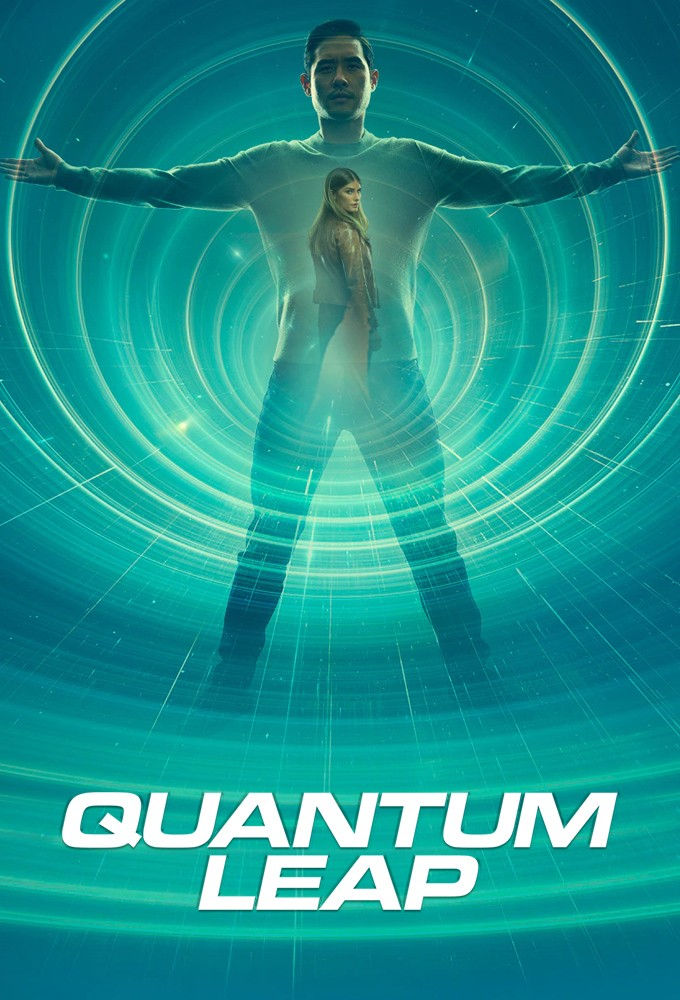
“And sometimes, that inner narrative stops moving forward: it stands upright.”
The verticality of time appears when a film stops unspooling duration and begins to stack it. The story no longer moves only ahead; it descends, rises, crosses layers. A single shot carries several floors: the visible scene and its resonances, the present gesture and its source, the instant and its consequence. Duration becomes depth—almost relief. Cinema reaches a stratified form of time, where the eye follows action while the soul reads, behind the image, a larger history already settling into place.
Thus, the dissociation of time in cinema never reduces art to a structural feat. It opens a space of perception where narrative touches what matters most: the way consciousness moves through the world. When chronology fractures, another measure appears. The spectator no longer follows a plot alone; they feel a duration, inhabit a fissure, sense the weight of an instant, the sting of a return, the pull of a scene yet to come. And when the lights come back on, one impression remains: a sense of having understood time—not through definition, but through contact.


