CANNES 2026 - 01

CANNES 2026
When the Festival Finally Slows Down
This final stretch of the Cannes week brings a particular feeling. The Croisette remains crowded, screenings continue one after another, flashes still cover the red carpet, yet something shifts in the rhythm of the Festival. A different breath appears. Cannes gives the impression of looking more closely at cinema than at its own reflection.

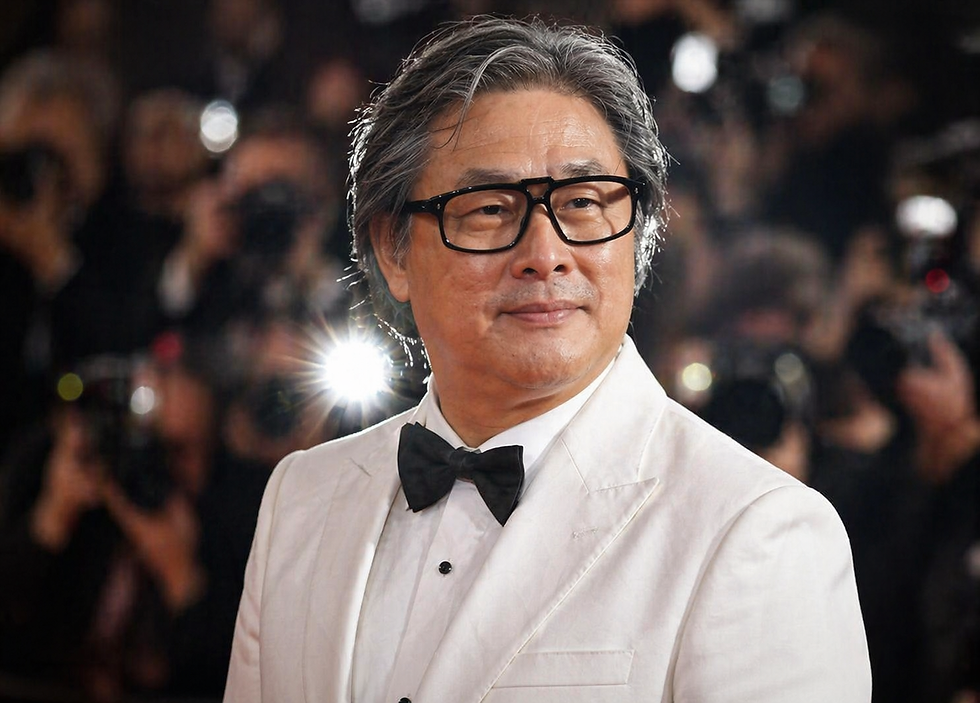
This 2026 edition moves forward with a quieter tension. The major names remain present. Pedro Almodóvar, Asghar Farhadi, Kore-eda, Cristian Mungiu and Rodrigo Sorogoyen carry the competition. Park Chan-wook leads the jury with a clear direction shaped around discussion, listening and artistic rigor.
Yet behind the posters and the red-carpet appearances, another movement runs through the Festival. A form of refocusing. Cannes seems to return to its raw material: films, filmmakers and perspectives.
The clearest signal may come from France Télévisions. The public broadcaster reduces its spending on the Croisette, limits accommodation costs and tightens its overall presence. (Kariata N°3) This decision goes beyond budget questions. It reflects an era. A period in which cinema searches for a new balance between visibility, industry and economic reality.
This evolution changes the atmosphere of the Festival. Some evenings feel more restrained. Movements become smoother. Conversations regain space around the screenings. Cannes sometimes rediscovers an almost unexpected dimension: a place where people still gather to speak about mise-en-scène, framing, rhythm and cinematic language.
La Cinef strongly contributes to this feeling. Inside the screening rooms dedicated to film schools, another energy circulates. The films arrive without heavy promotional machinery or visible strategy. They carry directness, fragility, occasional roughness, yet also a powerful impulse. Cinema appears there in its earliest form. A desire to tell stories before trying to convince.
This coexistence between internationally established filmmakers and this emerging generation creates one of the most compelling faces of Cannes 2026. The Festival gathers several generations of cinema within the same space, yet this year the boundary feels thinner. Young directors occupy more space in conversations. First features circulate rapidly. Morning screenings become genuine places of discovery.
The official Thelma & Louise poster perfectly supports this direction. Two women in motion, an open horizon, a road instead of a pose. The Festival itself seems to follow this movement. Less fixed in its own image, more connected to the idea of circulation and trajectory.
Even the Cannes nights evolve. After midnight, the Croisette sometimes regains a form of calm. The palaces remain illuminated, cars continue to pass, terraces stay alive until morning, yet the agitation feels more restrained. Cannes reveals its empty spaces, its silences, its slow walks facing the sea. As if the Festival had finally accepted the idea of slowing down.
Paradoxically, this slower rhythm gives greater visibility to the films themselves. Some works begin to exist beyond the immediate noise. Conversations continue after screenings. Critics take more time before shaping definitive judgments. Time slowly regains its place inside an event built on permanent acceleration.
Perhaps this is what the 2026 edition truly reveals. An industry searching for a new breath. A festival that remains immense, media-driven and globally observed, while allowing something simpler to reappear: the collective need to watch films together.