A TRIBUTE TO NATHALIE BAYE

A TRIBUTE TO NATHALIE BAYE
What Nathalie Baye Did Not Show
Serge Leterrier — For Diamont Media
"Some presences leave the screen. They remain in the way we receive light."
— Serge Leterrier
What Nathalie Baye did not show opens a space immediately. A discreet territory, almost secret, one that eludes the obvious and the hasty glance. It leads toward an actress whose presence never sought to impose itself, but to inscribe itself in something deeper, quieter, more lasting.

In cinema, certain actors occupy the screen through the force of gesture, the density of text, the demonstrative power of intensity. Nathalie Baye chose another path. A more interior path, more contained, where every movement seemed to arise from an intimate necessity rather than a will toward effect. A way of existing on screen without ever forcing her presence.
We watched her roles without always measuring what was truly at play within them. An economy. A precision. A way of allowing things to arrive rather than constructing them. Her performance moved within a restraint that gave the smallest detail a singular reach. A settled gaze, a suspended breath, an imperceptible shift in posture — these were enough to displace an entire scene.
That quality rests on mastery. A deep understanding of what cinema captures beyond words. Nathalie Baye worked in that place where the image becomes a space of perception — where the actor does not fill, but opens.
Within that opening, something circulates. An emotion that never gives itself entirely. A presence that does not surrender itself, but that exists with constant accuracy. This way of inhabiting a role creates a particular relationship with the viewer. A relationship built on attention, on listening, on a form of silent respect.
French cinema has carried this school of performance — this tradition of an interpretation that privileges the truth of the moment over demonstration. Nathalie Baye embodies one of its most accomplished expressions. A clear line, held, demanding, where each element finds its place without excess.

On several occasions, this presence made itself felt with particular clarity. In Une étrange affaire, she establishes an interior tension that circulates without ever exposing itself directly — a way of making unease exist within restraint. In La Balance, every gaze carries a density that exceeds the dialogue; every silence becomes a space where the scene continues to live. Later, in Le Petit Lieutenant, she gives the character a calm gravity, a humanity that unfolds in the economy of gesture, in that capacity to contain rather than express. And in Juste la fin du monde, she finds a rare intensity in simplicity — a presence that accompanies without ever seeking the centre, like a continuous line sustaining the whole.
In her roles, the body never sought to occupy the frame. It inscribed itself there with an accuracy that gave the image an added depth. Gestures remained measured. Movements aligned with an interior logic. Nothing overflowed. Nothing reached. And yet everything drew us in.
We learned to look differently through this presence. To attend to what unfolds in the margins, in the silences, in those zones where cinema reveals more than it shows. Nathalie Baye worked that invisible matter with remarkable consistency.
Her gaze deserves particular attention. It is not a gaze directed outward, but a gaze inhabited from within. A gaze that carries a history, a thought, a sensation. A gaze that simply exists. And in that existence, it becomes the anchor point of the scene.
The text, in her work, finds its precise place. It does not dominate. It accompanies. It inscribes itself in a continuity. The word arrives as an extension of silence, as a necessity. That articulation gives each phrase a particular resonance — a quality of listening that reaches beyond the simple transmission of meaning.
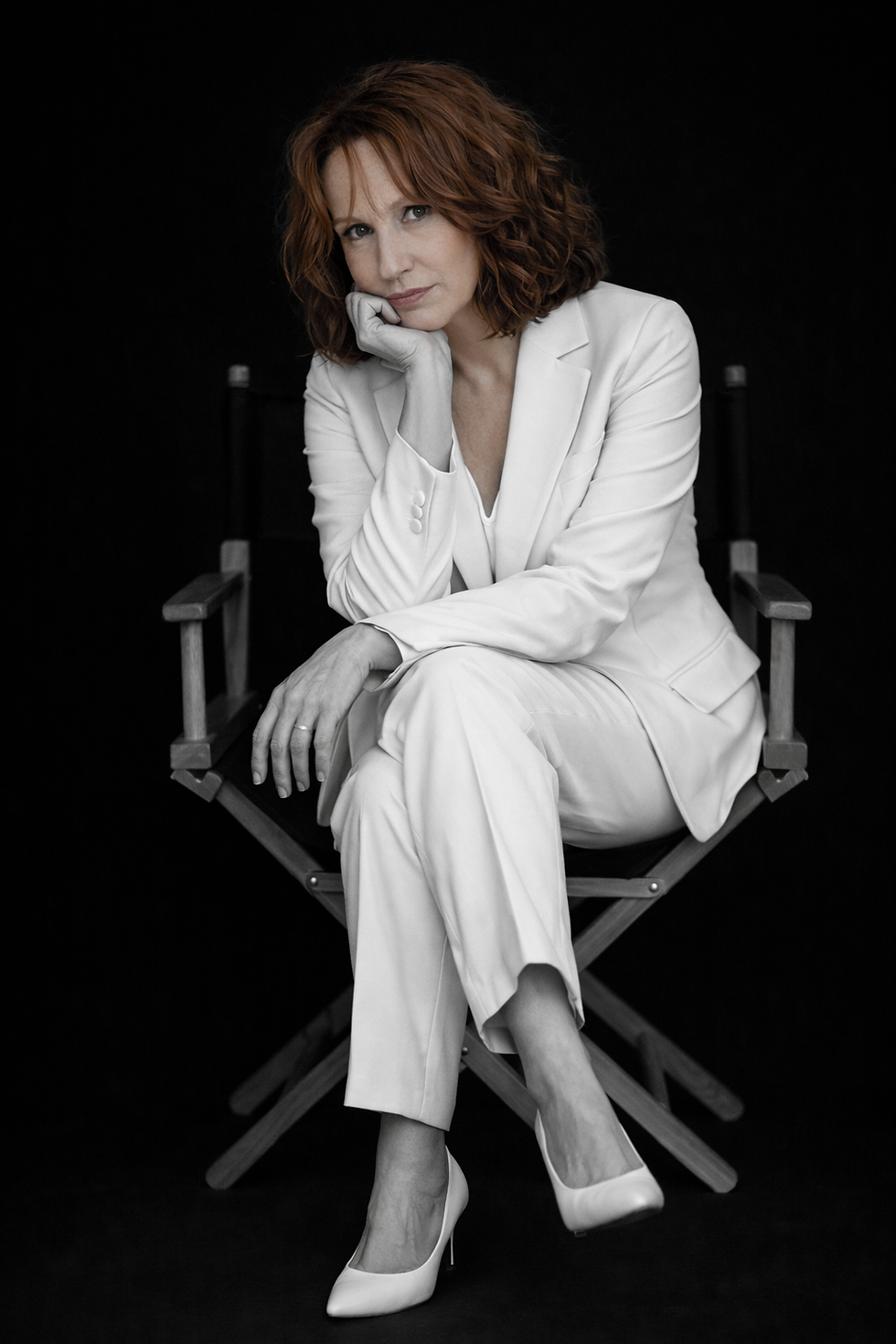
We have often associated power with visible intensity. Nathalie Baye shifted that perception. She showed that a presence can mark deeply without passing through augmentation. That a scene can remain in memory through a sustained accuracy, through a vibration that is almost imperceptible.
This approach demands constant rigour. It implies a mastery of rhythm, an understanding of the frame, a fine attentiveness to those alongside her. It presupposes a trust in cinema itself — in its capacity to capture what lies beyond the obvious.
Within that trust, a form of freedom appears. A freedom that does not pass through expansion, but through precision. A way of inhabiting a role by allowing the essential to circulate — without overload, without demonstration.
The viewer then finds an active place. They do not receive a constructed emotion. They enter a space. They observe, they feel, they complete. That participation creates a particular experience — more intimate, more profound.
Nathalie Baye built a trajectory in coherence with this demand. Each role extends that line. Each film affirms that presence. A continuity settles in, a signature takes shape — without ever seeking to be seen. Time gives this body of work an added dimension. It reveals the constancy, underlines the rigour, illuminates the singularity of a path. A way of being in cinema that crosses the years without diluting, without becoming posture.
Today, that presence continues to exist through the images. It accompanies our gaze. It reminds us that an actor can work within restraint and reach an enduring intensity. It opens a path, a possibility, a way of conceiving performance.
What Nathalie Baye did not show may be the most essential thing of all. An interior zone, a vibration, a quality of presence that eludes classification. A space where cinema finds a form of truth.
We carry that trace.
A way of looking. A way of listening. A way of inhabiting the image.
And within that continuity, something remains.
A presence.

Before closing this tribute, a gesture is called for. A gesture of writing. An attempt — not to speak in her place, but to approach the bond she wove with those who watched her. An imagined letter, as an address to the public, as a mark left in the silence of the seventh art.
An Imagined Letter Addressed to the Public
"I write to you from a place where one never films — a place where one remains, forever.
I often looked at you without seeing you. You were there, present, attentive, in the darkness of the theatres, in that listening one feels without ever fully grasping. I moved forward with only the essential — restrained gestures, words placed with measure, a way of existing without occupying all the space. And yet something passed between us: a vibration, an invisible thread. I felt it in your silence, in that way of staying, in that quiet faithfulness.
I never sought to give everything, because what holds back leaves room, because what remains in silence continues to live. You received that without asking for more, without forcing, with an attentiveness that carried each moment. Between us there was a just distance — a distance that connects, a distance that allows the image to breathe.
Today, something shifts. Time changes the shape of presences. Bodies move away. Images remain. And within those images, a part of me continues to circulate — not as a fixed trace, but as a movement. Perhaps you will find me there: in a gaze, in a waiting, in a silence that speaks to you.
The bond continues then, differently, without effort, without rupture. I leave you with that shared gaze, with what passed between us without ever being named. Keep that attentiveness — it gives existence to everything.
Nathalie, in thought"
"Cinema preserves what others allow to fade." — Serge Leterrier


